This kodak slide n scan max review looks at a film scanner designed to make home digitizing straightforward, with support for several common film formats and direct SD card saving.
Its appeal is a compact workflow for people who want editable digital copies without building a computer-centered scanning setup.
Slide N Scan Max Review Summary
The quick verdict
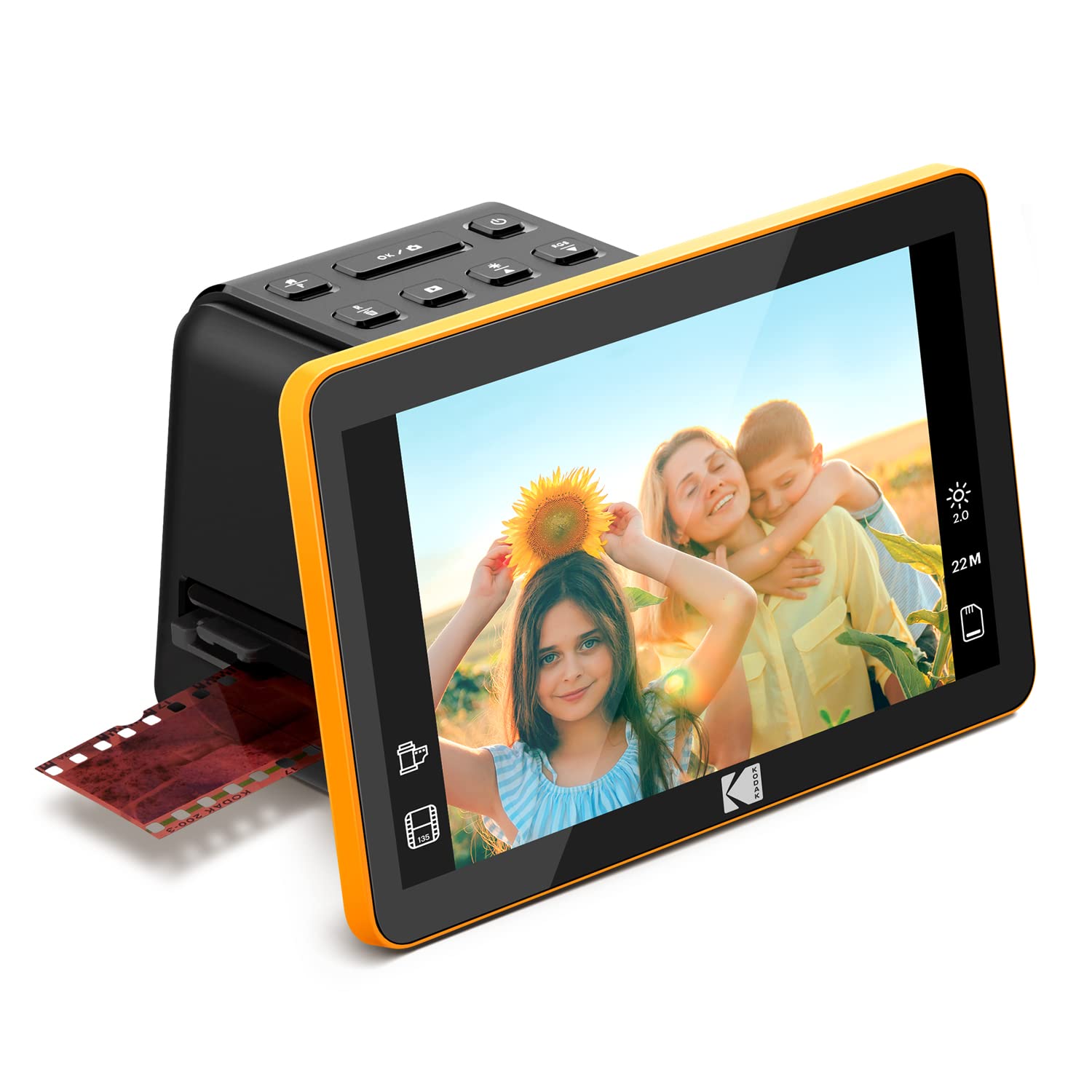
1,000+ ratings
Read Amazon ReviewsKODAK Slide N Scan Max
A practical fit for home archivists who want to scan common film formats and save images to an SD card without relying on a computer.
- Supports 135, 110, and 126 film formats, with slides and color or black-and-white negatives.
- Uses a smooth-moving tray designed to feed film without repeated repositioning.
- Saves scans directly to SD or SDHC cards up to 32GB, allowing a computer-free saving workflow.
- Offers one-touch resizing, conversion, and image adjustment through its capture software.

Pros
- Covers several widely used film formats in one device.
- Direct SD/SDHC saving makes it convenient to scan without keeping a computer connected.
Consider before buying
- The SD/SDHC card capacity tops out at 32GB, so larger archives may require transferring files and managing storage more often.
- The description identifies Windows 7 as the minimum system requirement; buyers with another setup should confirm compatibility before relying on USB transfer or software features.
Read the full review summary
The KODAK Slide N Scan Max combines a smooth-moving film tray, one-touch image adjustments, and SD/SDHC card saving in a compact scanner.
It handles 135, 110, and 126 film, including slides and color or black-and-white negatives, so it can suit households sorting different kinds of older film.
Its listed capture resolution reaches up to 4208 × 3120, using a 13MP CMOS sensor with 22MP interpolation. That gives buyers a stated high-resolution output option, though the description does not explain how interpolation affects detail.
The design is best for convenient personal archiving; buyers who need a specific computer workflow should check compatibility before purchase.
The buying factors
Slide N Scan Max Scorecard
Editorial scores reflect listed features and buyer fit; they are not laboratory measurements or customer ratings.
Film format coverage
Supports 135, 110, and 126 film, plus slides and color or black-and-white negatives.
Standalone workflow
Direct saving to SD/SDHC cards up to 32GB means scanning does not require a computer at every step.
Handling convenience
The smooth-moving tray is designed to feed film without constant repositioning.
On-device editing
One-touch resizing, conversion, and image adjustment are geared toward simple edits.
Output detail options
The described maximum is up to 4208 × 3120 with 22MP interpolation; the description provides limited detail on resulting image quality.
Setup compatibility
USB is listed, and Windows 7 is the minimum system requirement; buyers should confirm this suits their intended setup.
Key Features and Specifications of Slide N Scan Max
- Supports 135, 110, and 126 film formats, with slides and color or black-and-white negatives.
- Uses a smooth-moving tray designed to feed film without repeated repositioning.
- Saves scans directly to SD or SDHC cards up to 32GB, allowing a computer-free saving workflow.
- Offers one-touch resizing, conversion, and image adjustment through its capture software.
- Uses a 13MP CMOS sensor and lists output up to 4208 × 3120, with 22MP interpolation.
- Connects by USB; the listed minimum system requirement is Windows 7.
- Compact body measures 6.69 × 5.35 × 4.45 inches and weighs 16 ounces.
Pros and Cons of Slide N Scan Max
Pros
- Covers several widely used film formats in one device.
- Direct SD/SDHC saving makes it convenient to scan without keeping a computer connected.
- A feeding tray and one-touch controls aim to reduce repetitive handling and menu work.
- Offers a high stated output resolution with interpolation for buyers who want larger digital files.
Consider before buying
- The SD/SDHC card capacity tops out at 32GB, so larger archives may require transferring files and managing storage more often.
- The description identifies Windows 7 as the minimum system requirement; buyers with another setup should confirm compatibility before relying on USB transfer or software features.
- The stated 22MP figure uses interpolation, and the description does not clarify the difference between that figure and the sensor's native 13MP capture.
Who Should Buy Slide N Scan Max?
Good fit
Consider the Slide N Scan Max if you have a mixed collection of 135, 110, and 126 film and want a relatively direct path from physical originals to digital files.
The combination of film feeding, one-touch adjustments, and card saving is suited to occasional home archiving, where ease of use and avoiding a computer-dependent workflow matter.
It may also suit someone who wants to digitize in batches and review or organize the saved images later.
Before choosing it, make sure the 32GB card limit and the listed Windows requirement fit your workflow, and decide whether the interpolated output resolution meets your expectations for how you plan to use the scans.
Who should skip it
Look elsewhere if your archive depends on film formats beyond 135, 110, and 126, or if your required output workflow depends on a specific computer or storage setup that you have not confirmed compatible.
It may not be the right choice if you need a clearly specified native-resolution workflow; the description lists a 13MP sensor alongside 22MP interpolation without explaining how much additional image detail the interpolated files retain.
KODAK Slide N Scan Max Review: How Its Design Fits Home Archiving
Film format coverage for mixed collections
Support for 135, 110, and 126 film gives the scanner useful range for a household archive containing more than one format.
It also handles slides and both color and black-and-white negatives, making it a single-device option for these listed media types. If your collection includes other formats, check that each is supported before buying.
A simpler scanning rhythm
The moving tray is intended to feed film without constant repositioning, while one-touch editing handles resizing, conversion, and image adjustment. Together these features favor a repeated, straightforward process over a more involved editing routine.
The description does not specify batch capacity or scanning speed, so those details should not be assumed.
Saving files without a computer
Direct SD/SDHC saving up to 32GB is a practical choice when you want to scan near the originals and transfer files later.
It also makes card capacity part of the buying decision: larger projects may need multiple transfers or a plan for moving files off the card.
USB is listed for connection, with Windows 7 given as the minimum system requirement.
Interpreting the resolution figures
The scanner lists a 13MP CMOS sensor and output up to 4208 × 3120, with 22MP interpolation.
These numbers describe the available output approach, but they do not by themselves establish how much fine detail a scan will preserve.
Buyers choosing based on print size or close cropping should consider whether the stated resolution method fits those priorities.
Alternatives to Slide N Scan Max
Slide & Negative Scanners alternative
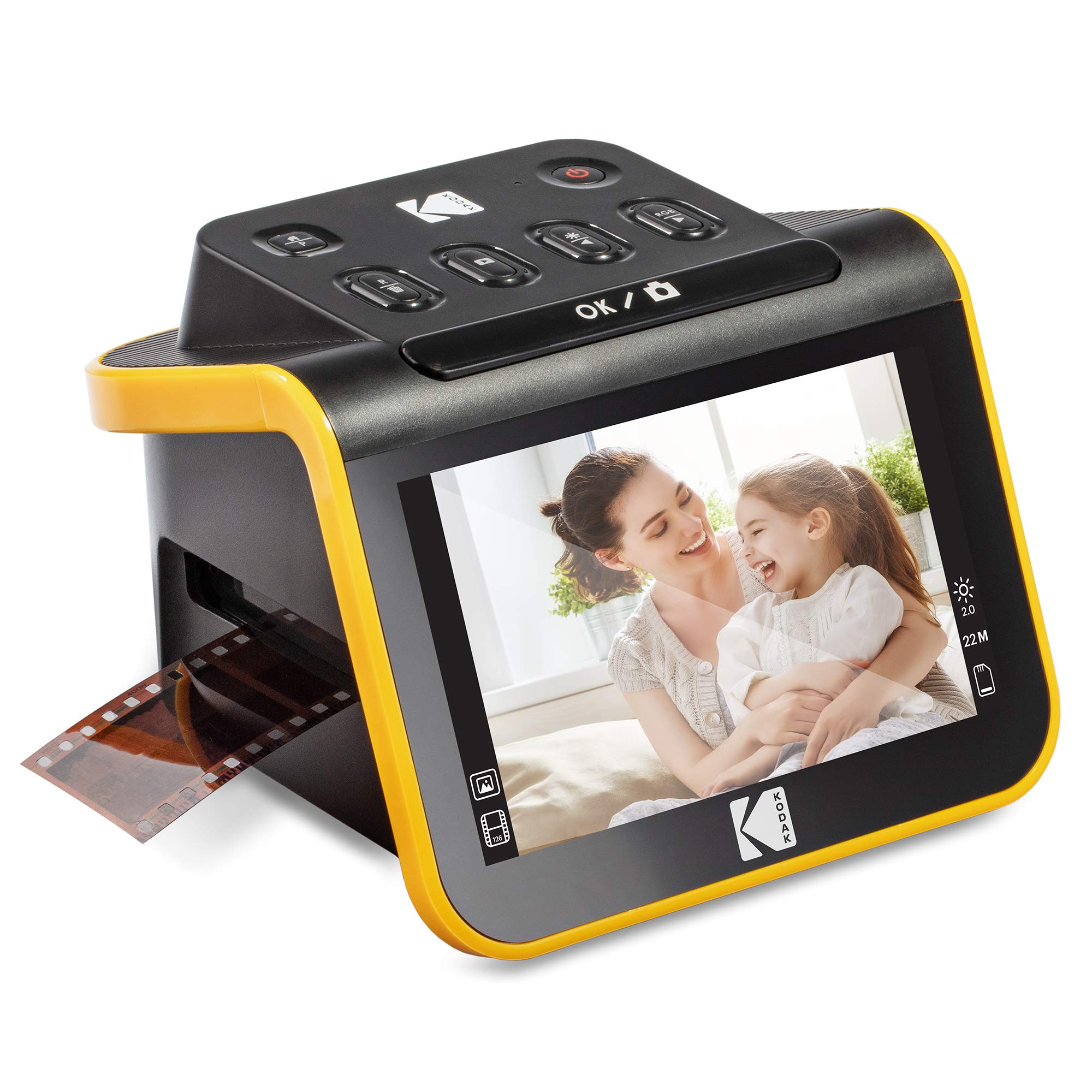
12,000+ ratings
Read Amazon ReviewsKODAK Slide N Scan Film & Slide Scanner
Choose the Slide N Scan Max if its described compact setup and output figures are the better fit.
Consider the other Slide N Scan when a built-in 5-inch preview screen and the included cables and adapters are more useful to your workflow.
- This Slide N Scan model supports the same 135, 110, and 126 formats and also has a 5-inch LCD for previewing and editing.
- Its listed package includes film adapters, a cleaning brush, and USB and HDMI cables; it saves to SD/SDHC cards up to 32GB.
- The Slide N Scan Max supports 135, 110, and 126 film, saves directly to SD/SDHC cards up to 32GB, and focuses on a compact scanning workflow with one-touch editing.
Slide & Negative Scanners alternative
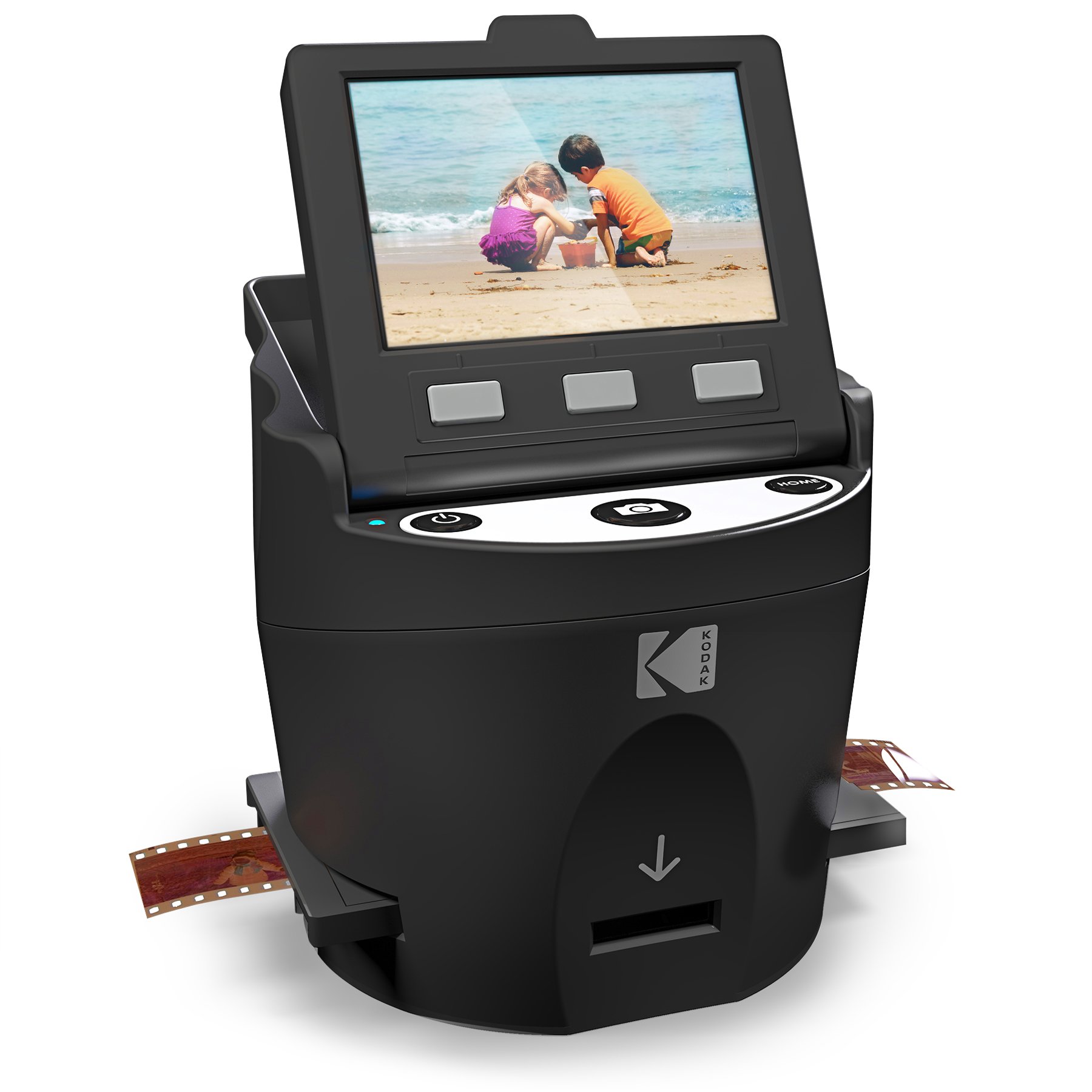
11,000+ ratings
Read Amazon ReviewsKODAK SCANZA Film & Slide Scanner
The SCANZA is the stronger fit if Super 8 or 8mm coverage, a built-in screen, or higher listed SD capacity matters to you.
The Slide N Scan Max remains a reasonable choice if its supported formats cover your collection and you prefer its direct, compact workflow.
- The SCANZA supports 35mm, 126, 110, Super 8, and 8mm film, and includes a 3.5-inch adjustable-brightness TFT LCD.
- It supports SD cards up to 128GB and lists multiple film inserts and adapters, plus USB, HDMI, AC, and video cables.
- The Slide N Scan Max is described for 135, 110, and 126 film, with SD/SDHC card saving up to 32GB and a 13MP CMOS sensor with 22MP interpolation.
Is Slide N Scan Max Worth It?
The KODAK Slide N Scan Max is worth considering for home archivists who want to digitize 135, 110, and 126 film with a simple tray-fed process and direct SD card saving.
Its one-touch editing and compact body make the described workflow approachable for personal collections.
Buy it if those formats and the 32GB card ceiling suit your project, and if the listed Windows requirement works for your setup.
Treat the 22MP interpolation as an output figure rather than a guarantee of extra captured detail, and choose another scanner if your collection or workflow needs broader format coverage.
Your review at a glance
1,000+ ratings
Read Amazon ReviewsKODAK Slide N Scan Max
A practical fit for home archivists who want to scan common film formats and save images to an SD card without relying on a computer.
- Supports 135, 110, and 126 film formats, with slides and color or black-and-white negatives.
- Uses a smooth-moving tray designed to feed film without repeated repositioning.
- Saves scans directly to SD or SDHC cards up to 32GB, allowing a computer-free saving workflow.
- Offers one-touch resizing, conversion, and image adjustment through its capture software.